Let me start with something that might change the way you cook tonight.
You buy organic broccoli. You wash it carefully. You cut it into florets and put it in a pot of boiling water. You drain it, season it, and serve it feeling good about the healthy choice you just made.
Here’s the problem.
By the time that broccoli reaches your plate, boiling may have reduced some of its water-soluble nutrients.
I’ve spent more than 40 years working in cookware development and observing how heat interacts with food. Broccoli is a good example of how cooking methods can influence texture, flavor, and nutrient retention.
Why Cooking Method Matters for Broccoli
Broccoli is a nutrient-rich vegetable that provides vitamin C, vitamin K, folate, fiber, and several naturally occurring plant compounds.
Sulforaphane
Broccoli contains glucoraphanin, which can be converted into sulforaphane through the action of an enzyme called myrosinase. Sulforaphane has been widely studied for its potential role in supporting the body’s natural cellular defense processes.
Vitamin C
Broccoli is a useful source of vitamin C, an essential nutrient involved in normal immune function and collagen formation.
Folate
Folate plays an important role in normal cell division and other essential body functions.
Vitamin K
Broccoli provides vitamin K, which contributes to normal blood clotting and the maintenance of normal bones.
Fiber
Broccoli also provides dietary fiber, which supports normal digestive function.
Cooking does not make broccoli unhealthy. However, the cooking method can influence how much of certain heat-sensitive and water-soluble nutrients remain in the food.
What Boiling Actually Does to Broccoli
When broccoli is cooked in a large amount of boiling water, some water-soluble nutrients, including vitamin C and folate, can move into the cooking water. The amount lost varies depending on cooking time, temperature, and preparation method.
Heat can also reduce the activity of myrosinase, the enzyme involved in converting glucoraphanin into sulforaphane.
Method 1: Low-Moisture Steam Cooking (My Preferred Method)
This does not mean boiled broccoli has no nutritional value. It simply means that shorter cooking times and methods using less water may help retain more of certain nutrients and plant compounds.
For me, that is a practical reason to avoid prolonged boiling whenever possible.
The Right Way to Cook Broccoli
Gentler Ways to Cook Broccoli
My goal is simple: cook broccoli until it is enjoyable to eat while using as little water and unnecessary cooking time as practical.
Method 1: Low-Moisture Steam Cooking (My Preferred Method)

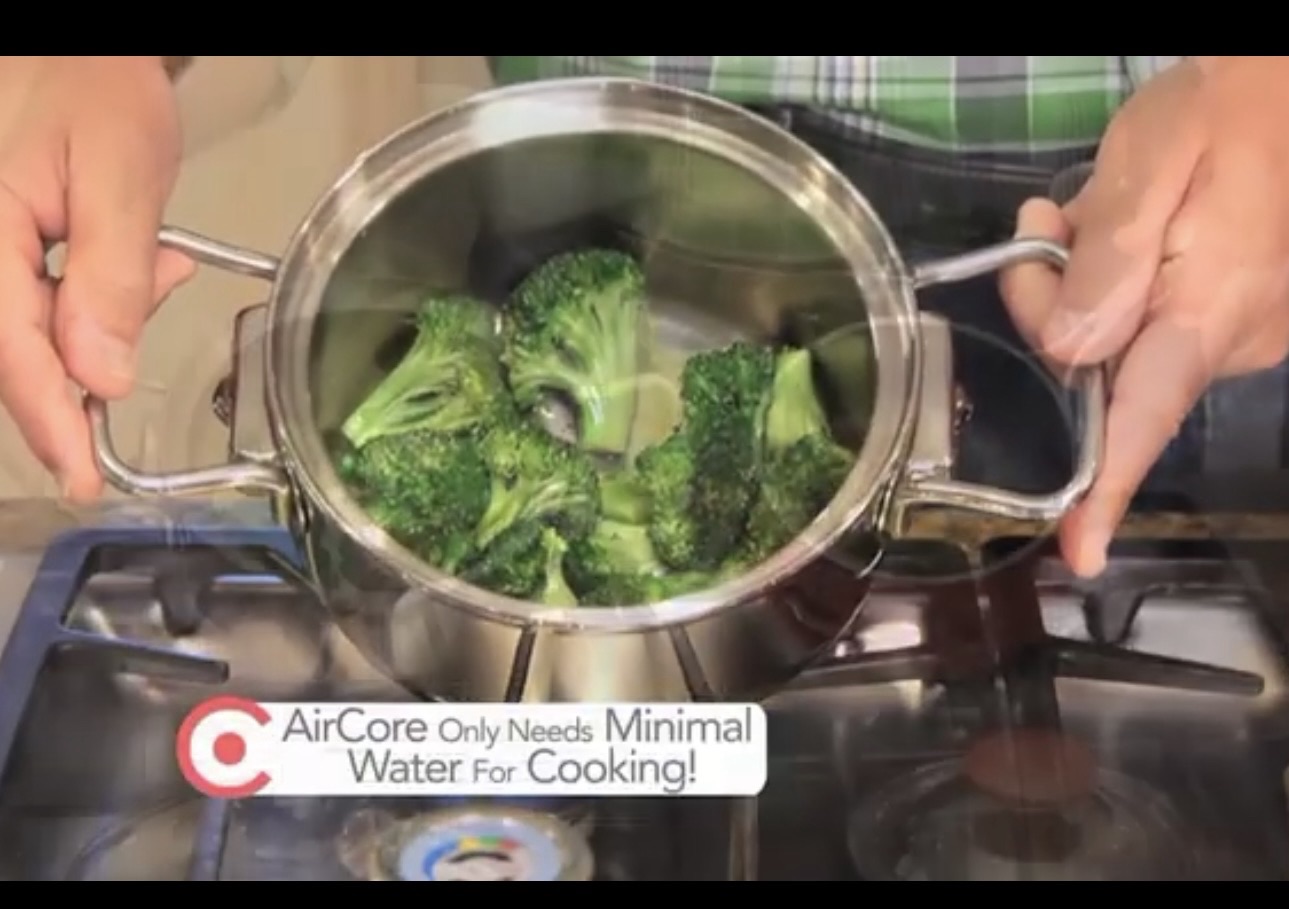
My low-moisture broccoli cooking method using gentle heat and minimal added water.
Place broccoli florets in a heavy pan with a small amount of water, or use the moisture remaining on the broccoli after washing when your cookware and cooking method allow it.
Cover with a tight-fitting lid and cook gently over medium-low heat until just tender and still bright green.
This is the method I personally prefer. Using less cooking water means there is less water available for water-soluble nutrients to leach into and later be discarded.
Just as importantly, I enjoy the texture and natural flavor of broccoli prepared this way.
Method 2: Enjoy It Raw
Raw broccoli is another option for people who enjoy its crisp texture. Because it has not been exposed to cooking heat, its naturally occurring myrosinase remains active.
I sometimes enjoy raw broccoli with a simple dressing such as extra virgin olive oil. As with any raw vegetable, wash it thoroughly before eating.
Method 3: Chop Before Cooking
Some research suggests that chopping broccoli and allowing it to rest before cooking may give myrosinase time to act on glucoraphanin before the vegetable is exposed to heat.
A practical approach is to chop the broccoli first, let it rest for a while, and then cook it gently.
Another option discussed in food research is adding a small amount of mustard powder to cooked broccoli because mustard also contains myrosinase.
These are interesting techniques, but I see them as optional additions—not rules everyone needs to follow.
What I do Every Time I Cook Broccoli
After more than 40 years working in cookware development and manufacturing, I have become very interested in how different cooking methods affect food. Here is the simple approach I use in my own kitchen:
I cook broccoli covered, using minimal water and moderate heat, just until it becomes tender while still retaining its color and texture.
Sometimes I chop it ahead of cooking, and I may finish it with a little extra virgin olive oil or mustard powder.
What matters most to me is simplicity: less water, gentle heat, and no unnecessary overcooking.
The result is broccoli with a texture, color, and natural flavor that I personally prefer.
The Bigger Principle
Broccoli is one example of a broader principle I have learned through decades of cookware development: more water and more heat are not always better.

A comparison from my own kitchen using a different pot and cooking approach. Results can vary depending on heat, cookware, cooking time, and the amount of water used.
I prefer gentle heat, minimal added water, and shorter cooking times whenever practical. For me, the goal is simple — preserve the ingredient’s natural color, texture, and flavor while avoiding unnecessary overcooking.
The photos above show what I observed in my own kitchen. They are not a laboratory comparison, but they illustrate why cookware design and cooking technique have remained so important to me throughout my career.
Let’s Keep the Conversation Going
I’m still learning, experimenting, and sharing what I have discovered through more than 40 years in cookware development and manufacturing.
How do you usually cook broccoli — boil, steam, stir-fry, or use very little water?
I’d love to hear about your experience.
You can find my cooking videos, stories, and other channels in one place here:
Peter Park’s Linktree:
https://linktr.ee/peterpark3126
Thank you for joining me at Grandpa Pot’s Healthy Table. Let’s keep learning how small changes in the kitchen can help us cook better, one meal at a time.
#BroccoliCooking
#HealthyCooking #WaterlessCooking
#LowMoistureCooking
#CookwareEngineering
#HealthyEating
#VegetableCooking
#AirCoreCookware #PeterPark
#GrandpaPotsHealthyTable
Response
Broccoli was the vegetable that
changed everything for me.
Specifically, sulforaphane — one of
the most powerful anti-cancer compounds
found in any food. And one of the most
fragile when exposed to boiling water.
The mustard powder trick I discovered
after years of research: add a pinch
of mustard powder to cooked broccoli.
The myrosinase in mustard restores
what heat destroyed.
But the better solution is simpler —
don’t destroy it in the first place.
Low heat. Minimal moisture.
Let the broccoli cook in its own steam.
Sulforaphane stays intact.
That’s what AirCore was designed for.
All my cooking tips & videos:
linktr.ee/peterpark3126