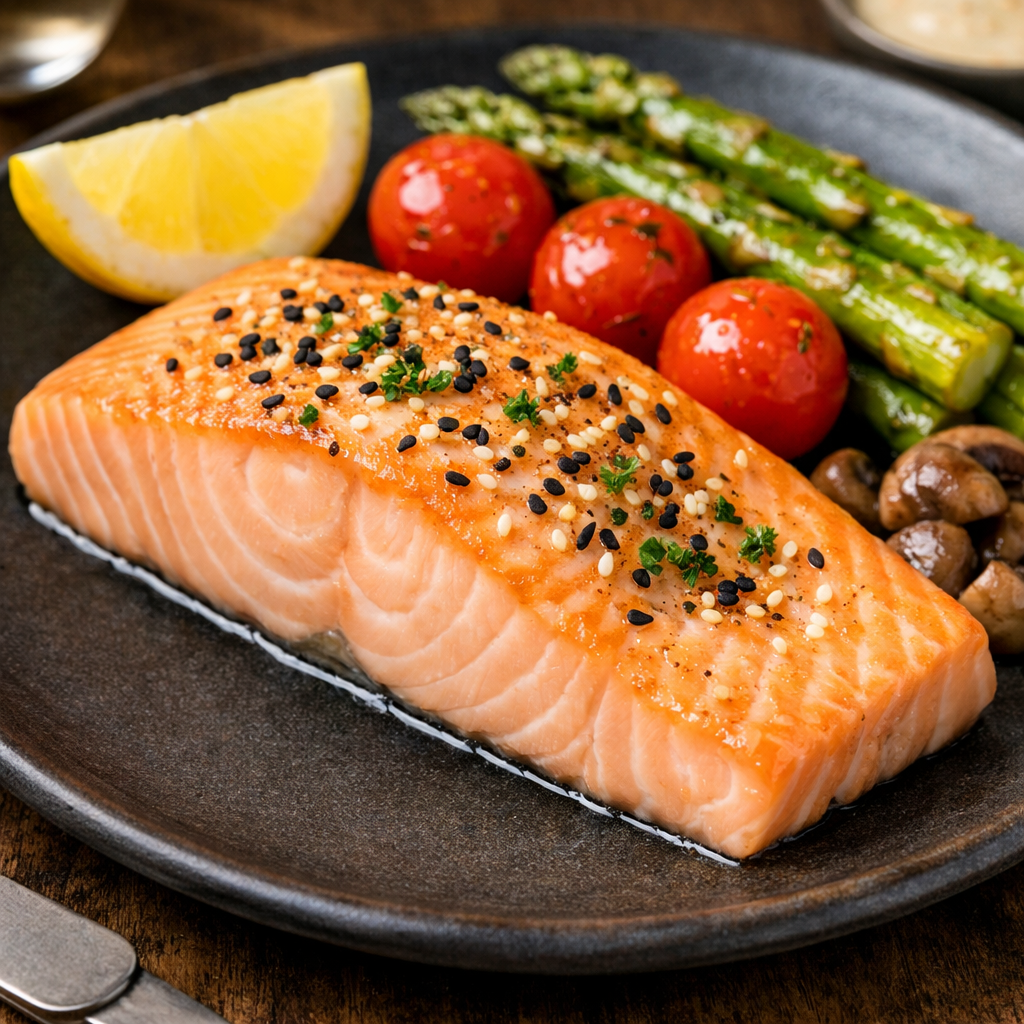
Salmon is one of the foods I enjoy because it doesn’t need complicated seasoning or aggressive cooking.
But over the years, I’ve noticed something simple: good ingredients often need less cooking, not more.
I spent more than 40 years developing and manufacturing stainless-steel cookware. That experience taught me to pay close attention to how heat moves through a pan and how food responds to temperature.
Salmon is a good example.
When the pan is extremely hot, the outside can brown quickly while the inside is still catching up. With more moderate heat, I find it easier to control the texture and avoid drying out the fish.

Salmon cooked with controlled heat can stay moist and tender without excessive browning.
Why I Prefer Gentle Heat for Salmon
Salmon contains protein and naturally occurring fats, including omega-3 fatty acids.
Omega-3 fats are relatively sensitive to oxidation, and cooking conditions—including temperature, time, and exposure to air—can influence changes in fats during cooking.
That does not mean we should be afraid to cook salmon or that frying automatically makes salmon unhealthy.
For me, the practical lesson is much simpler:
Use only as much heat as the food actually needs.
This gives me better control over doneness while helping preserve the salmon’s natural moisture, texture, and flavor.
What 40 Years Around Cookware Taught Me
One mistake I often see is assuming that higher heat means better cooking.
It doesn’t always.
A very hot pan can be useful when strong browning is the goal, but salmon is delicate. Excessive heat can quickly make the surface dry before the center reaches the texture you want.
My approach is to start with moderate heat and adjust gradually.
The cookware matters, too. A pan that distributes heat evenly makes temperature control easier because there are fewer extremely hot areas.
But cookware alone cannot guarantee good results.
Heat control, cooking time, the thickness of the salmon, and your technique all matter.
My Simple Method for Cooking Salmon
I usually keep the method uncomplicated.
Pat the salmon dry first. Preheat the pan over moderate heat rather than maximum heat. Add a small amount of cooking oil if needed, then place the salmon in the pan.
Allow it to cook gently without constantly moving it.
As the salmon cooks, reduce the heat if the surface begins browning too quickly.
The goal is not to create the darkest crust possible. I prefer salmon that remains moist and tender inside.
For food safety, the USDA recommends cooking fish to a safe internal temperature; use a food thermometer when appropriate rather than judging only by appearance.
More Heat Is Not Always Better
This principle extends far beyond salmon.
During my career working with cookware, I became increasingly interested in one question:
How much heat and water does food really need?
Vegetables naturally contain water. Fish contains moisture. Many ingredients can be cooked successfully without excessive water or prolonged high heat.
That idea eventually became central to the way I think about low-moisture cooking:
Use the ingredient’s natural moisture whenever practical and control heat carefully.
It is not about claiming that one cooking method is perfect. It is about understanding the ingredient and using an appropriate cooking method.
What About Omega-3s?
Salmon remains an excellent dietary source of EPA and DHA omega-3 fatty acids.
Cooking can cause chemical changes in fats, and the extent varies considerably depending on temperature, duration, cooking method, and the food itself.
For that reason, I would not say that simply hearing a salmon “sizzle” means its omega-3s are being destroyed.
That would be an oversimplification.
Instead, my practical approach is to avoid unnecessarily aggressive or prolonged heating while still cooking the fish properly and safely.
The Lesson I Keep Coming Back To
After four decades around cookware, one lesson has stayed with me:
Better cooking often comes from control rather than intensity.
Good ingredients already contain flavor, moisture, and nutrients. Our job in the kitchen is not always to add more heat, more water, or more ingredients.
Sometimes the best thing we can do is simply avoid doing too much.
The next time you cook salmon, try lowering the heat slightly and paying attention to how the fish responds.
You may find that gentler cooking gives you exactly what you were looking for: a moist interior, pleasant texture, and the natural flavor of salmon.
I continue sharing practical lessons from my 40 years in cookware development and manufacturing, along with what I learn about food while traveling.
You can also follow my cooking and travel stories through Grandpa Pot’s Healthy Table on YouTube and my Linktree.

Response
That sizzle is one of the most
misleading sounds in cooking.
We’ve been trained to associate it
with “doing it right” — but it’s
actually the sound of omega-3s
oxidizing under high heat.
After 40 years engineering cookware,
I designed AirCore specifically to
solve this problem. Medium-low heat.
No hot spots. No sizzle.
The salmon tastes better too —
because the moisture stays in the fish
instead of escaping as steam.
Try it once and you won’t go back.
All my cooking tips & videos:
linktr.ee/peterpark3126