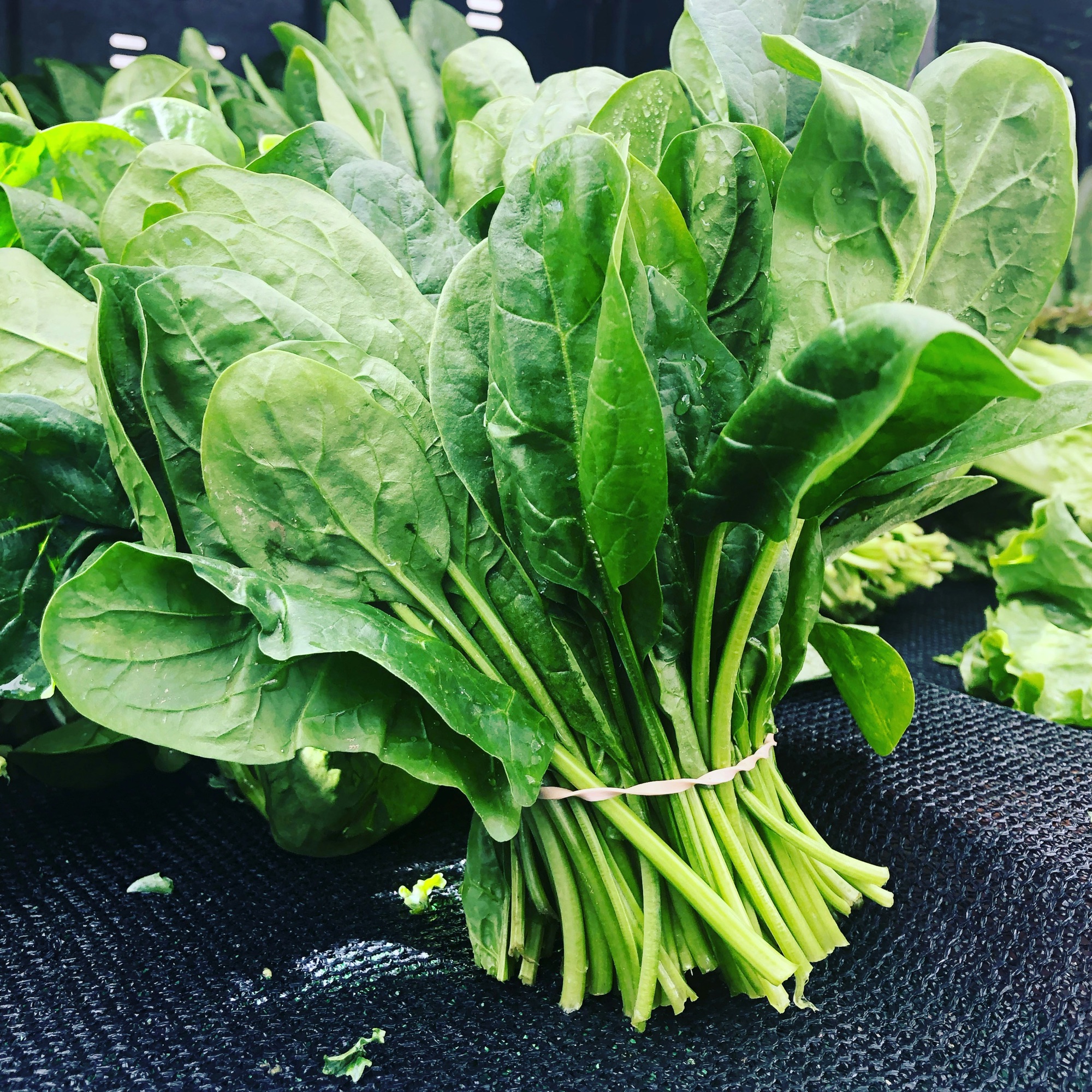

Spinach has been part of healthy eating for generations.
From Popeye to green smoothies, salads and Mediterranean-style meals, spinach has earned a reputation as one of the most familiar leafy greens on the American table.
But after more than 40 years working in stainless-steel cookware development and manufacturing, I have learned to ask a different question:
Does boiling spinach reduce nutrients—and does the way we cook it matter as much as the vegetable we choose?
The answer is more nuanced than saying raw spinach is always better or that boiling destroys everything.
Cooking changes food. Some nutrients are affected by heat, some can move into cooking water, and others may become more accessible after cooking.
For me, the practical lesson is simple:
Use water, heat and cooking time thoughtfully.
Why Spinach Is Worth Cooking Carefully
Spinach naturally provides a wide range of nutrients and plant compounds, including:
- Folate
- Vitamin C
- Vitamin K
- Magnesium
- Iron
- Lutein
- Zeaxanthin
- Other carotenoids and antioxidants
But these compounds do not all respond to cooking in the same way.
Folate and vitamin C are water-soluble, for example, while lutein and zeaxanthin are fat-soluble carotenoids.
That means there is no single cooking rule that applies to every nutrient.
This is one reason I have become increasingly interested in low-moisture cooking rather than automatically placing vegetables into a large pot of boiling water.
Does Boiling Spinach Reduce Nutrients?
When spinach is boiled in a large amount of water, some water-soluble nutrients can move from the leaves into the cooking liquid.
What happens next matters.
If the liquid becomes part of a soup or sauce, it is still being consumed.
But when the cooking water is discarded, nutrients that have migrated into that water are discarded with it.
Cooking time matters as well. Prolonged exposure to heat can affect heat-sensitive compounds.
This does not mean boiled spinach suddenly becomes unhealthy.
It means that if our goal is to retain more of what was naturally present in the vegetable, using less water and avoiding unnecessary cooking time can be a sensible approach.
What Happens to Folate and Vitamin C?
Folate and vitamin C deserve particular attention because both are water-soluble.
Cooking spinach in large amounts of water gives these nutrients more opportunity to move into the cooking liquid.
Vitamin C is also sensitive to prolonged heat.
For that reason, when I prepare spinach at home, I generally prefer a short cooking time with little or no added water rather than prolonged boiling.
It is a small change in technique, but one that reflects a principle I learned through decades of cookware development:
Good cooking is not only about temperature. It is about managing heat, moisture and time together.
What About Iron, Lutein and Zeaxanthin?
Spinach also provides non-heme iron and carotenoids such as lutein and zeaxanthin.
These behave differently from water-soluble vitamins.
Cooking can soften plant tissue and change how certain compounds become available during digestion.
Lutein and zeaxanthin are fat-soluble, which is why I often pair spinach with a modest source of dietary fat such as extra-virgin olive oil or avocado.
This illustrates why the question isn’t simply:
Raw or cooked?
A better question is:
How should I prepare spinach to make it enjoyable while avoiding unnecessary water and excessive heat?
Raw Spinach or Cooked Spinach: Which Is Better?
I eat both.
Raw spinach works beautifully in salads and other fresh dishes.
Cooked spinach has a softer texture and makes it easier to enjoy a substantial serving of leafy greens.
Rather than treating one as universally superior, I believe variety makes more sense.
Method 1: Gentle Low-Moisture Cooking
This is the method I personally use most often.
After washing the spinach, I allow a small amount of moisture to remain on the leaves.
I place it in covered cookware and apply gentle heat.
The moisture already present in the spinach, together with the small amount left from washing, creates steam inside the covered pan.
Once the leaves have wilted and reached the texture I want, I stop cooking.
The goal is not to claim that every nutrient remains unchanged.
The goal is much more practical:
Avoid unnecessary water and unnecessary cooking time.
Method 2: Raw Spinach With Healthy Fats
Raw spinach is another simple option.
When I make a spinach salad, I often include foods such as:
- Extra-virgin olive oil
- Avocado
- Eggs
- Nuts or seeds
Adding some dietary fat also complements fat-soluble carotenoids such as lutein and zeaxanthin.
There is no need to claim that raw spinach retains “100%” of its nutrients. Fresh produce itself varies depending on storage, age and preparation.
The important point is simply that eating spinach raw avoids the nutrient changes associated with cooking.
Method 3: Spinach in Smoothies
Spinach can also be incorporated into smoothies.
I like combining it with ingredients such as fruit, yogurt, avocado or nut butter depending on the recipe.
This offers another way to enjoy spinach without boiling it.
The larger lesson is variety.
Spinach does not need to be prepared the same way every day.
The Iron and Vitamin C connection
Spinach contains non-heme iron, the form of iron found in plant foods.
Vitamin C can help improve the absorption of non-heme iron, which is why combining spinach with vitamin-C-containing foods can be useful.
Some combinations I enjoy include:
- Wilted spinach finished with fresh lemon juice
- Spinach salad with lemon and olive oil dressing
- Spinach smoothie with strawberries or kiwi
- Spinach served alongside bell peppers
Again, I don’t consider these medical prescriptions.
They are simply practical food combinations I use in my own kitchen.
What I Do Every Time I Cook Spinach

Cooking spinach with little added water in AirCore cookwareMy own approach comes from decades of observing how cookware, heat and moisture interact with food.
I am not a professional chef or nutritionist.
My professional background is in developing and manufacturing stainless-steel cookware, and that experience has made me particularly interested in how cookware design influences the cooking environment.
When I cook spinach, I keep the process simple.
I wash the spinach.
I place it in my AirCore cookware without adding a pot full of water.
I cover it and apply medium-low heat.
I watch the spinach carefully and stop cooking once the leaves have wilted to the texture I want.
Then I often finish it with a small amount of extra-virgin olive oil and fresh lemon juice.
The spinach remains colorful and has the texture and flavor I prefer.
More importantly, the method reflects the cooking philosophy I have developed over many years:
No Water—or minimal added water. No Added Sugar. Use the food’s own moisture whenever practical.
Why Cookware Design Matters
This is where my professional experience becomes especially relevant.
Cookware influences how heat moves through food, how moisture escapes and how effectively the cooking environment can be controlled.
A well-fitting lid helps retain moisture.
Even heat distribution can reduce the need for aggressive temperatures.
And using the natural moisture in vegetables can reduce the need to submerge them in water.
None of this means that cookware can magically “lock in” every nutrient.
It cannot. But cookware can give us better control over the three variables I consider fundamental:
Heat. Moisture. Time.
That is what interests me after more than four decades in this industry.
See My Low-Moisture Cooking Method in Action
Several years ago, I filmed a demonstration showing the cooking principle I continue to use today.
Rather than simply describing it, you can see how the cookware and cooking method work with vegetables.
Watch: AirCore Waterless Cooking Demonstration
When watching the demonstration, notice the cooking process rather than focusing only on the cookware:
How much water is being added?
How much heat is being used?
How long is the vegetable being cooked?
Those are questions that apply to almost any cookware.
The Bigger Lesson: Cook the Food Gently
Spinach is only one example. Broccoli, carrots, mushrooms and other vegetables respond differently to heat, water and cooking time.
That is why I don’t believe there is one perfect cooking method for every food. But one principle has stayed with me throughout my career:
Good cooking isn’t always about adding more. Sometimes it is about taking less away.
Less unnecessary water.
Less excessive heat.
Less unnecessary cooking time.
And more attention to what the ingredient itself provides.
What 40 Years in Cookware Taught Me
When I first entered the cookware business decades ago, I was primarily thinking about product design, stainless steel, heat distribution and manufacturing.
Over time, my perspective changed.
I began thinking more about the food inside the cookware.
What happens to vegetables when we boil them?
Why do we automatically add water when vegetables already contain moisture?
Can cookware design help us cook more gently?
These questions eventually became more interesting to me than simply making another pot or pan.
And even after 40 years, I am still learning.
My Simple Spinach Rule
If you remember only one thing from this article, make it this:
Don’t be afraid to cook spinach—but don’t automatically drown it in water.
Try using less water.
Use gentle heat.
Cook only as long as necessary.
Experiment with raw spinach as well.
Add foods such as olive oil, avocado, lemon or other ingredients that complement the meal.
Then decide which method works best for your own kitchen.
That is a much more useful approach than declaring one cooking method universally “right” or “wrong.”
Let’s Keep the Conversation Going
After more than 40 years working with stainless-steel cookware, I’m still learning something new about food, heat, and cooking every day.
If you have your own way of cooking spinach—or another vegetable you’d like me to explore next—I’d love to hear from you.
You can find my cooking videos, healthy cooking articles, travel stories, and social channels all in one place:
👉 Connect with me on Linktree
https://linktr.ee/peterpark3126
How do you cook spinach at Home ?
Raw, lightly cooked, or with very little added water? Share your experience. Your idea may inspire one of my next articles.
Response
Spinach was my first lesson in how
cooking method changes everything.
We assume boiling is safe and healthy.
But the water doesn’t just cook
the spinach — it pulls out the folate,
magnesium, and iron and pours them
down the drain.
After 40 years in cookware engineering,
the solution I keep coming back to
is the simplest one:
Use the moisture already inside the leaf.
Low heat. Covered pot. No added water.
The spinach wilts in its own steam.
The nutrients stay exactly where
they belong — in your food.
That’s the AirCore difference.
All my cooking tips & videos:
linktr.ee/peterpark3126