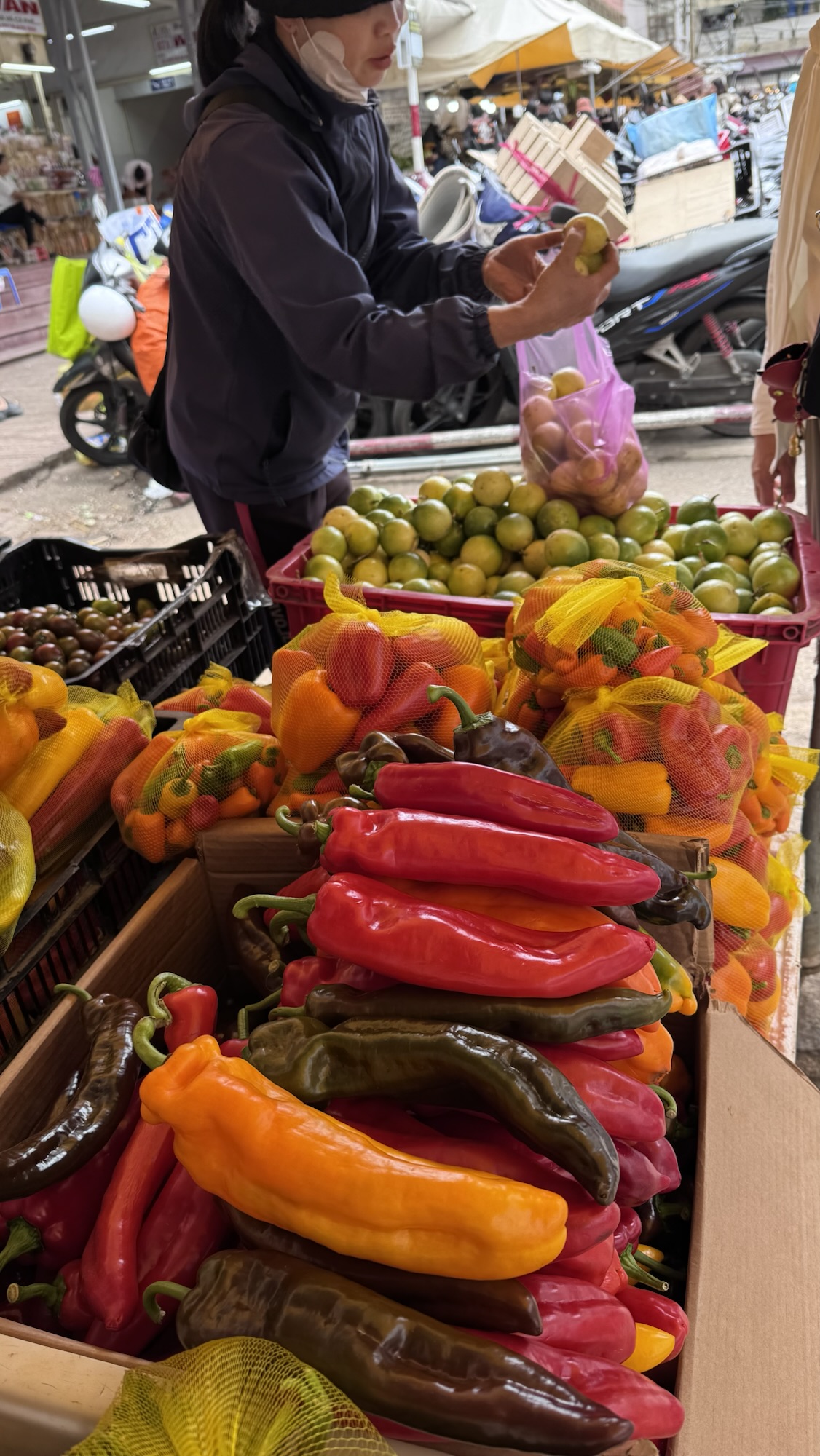
Traveling through Vietnam, one simple observation continuously catches my attention: fresh vegetables and aromatic herbs are not just side dishes—they are the core foundation of almost every single meal.
During my recent stay in Dalat, I enjoyed a simple yet memorable plate of local street-style grilled meat. It arrived accompanied by rice noodles, crisp cucumber, lettuce, fresh cabbage, and a generous basket filled with vibrant local herbs. As someone who has spent over four decades in cookware engineering and food presentation, watching how locals build their daily plates offers a fascinating lesson in balanced nutrition and sensory harmony.

A Different Way to Build a Balanced Plate
In many Western-style culinary traditions, meat often dominates as the main focal point of the dish, while vegetables serve as a secondary garnish. Vietnamese food culture flips this balance entirely.
Instead of making meat the central piece, a typical Vietnamese meal combines a modest portion of protein with an abundance of fresh greens, raw vegetables, and light noodles. You take a piece of warm, flame-grilled meat, pair it with crisp greens, wrap them together with herbs, and enjoy everything in a single bite. The result is a vibrant contrast of textures, natural colors, and clean flavors that never feel heavy on the stomach.

The Culinary and Nutritional Magic of Fresh Herbs
What particularly interests me is the sheer variety and volume of raw herbs served at the table. These herbs—ranging from Vietnamese coriander and mint to specialized local greens like Lá lốt (wild betel leaf) and Houttuynia cordata (fish mint)—are far more than decorative toppings.
From a food and digestive standpoint, this practice serves several key functions:
Digestive Harmony: Fresh herbs contain raw enzymes and natural oils that aid in breaking down rich, grilled proteins.
Nutrient Preservation: Eating greens raw ensures that heat-sensitive vitamins, particularly Vitamin C and delicate antioxidants, remain completely intact.
Flavor Elevation: Instead of relying on heavy sauces, salt, or excess oil, flavor complexity is achieved through the natural bitterness, pepperiness, and citrus notes of live plants.
Healthy Eating Lessons from My Travels
After spending extended time exploring local food spots across Dalat, I have come to deeply appreciate this straightforward approach to daily wellness. Healthy eating does not always require complicated recipes or rigid dietary rules. Often, it simply starts with returning to whole, fresh ingredients and balancing our plates with intention.
This simple yet powerful lesson from Vietnam is one I am eager to take home and apply to my own cooking and daily habits.
More variety. More fresh ingredients. A better balance on the plate.
Healthy eating doesn’t always have to be complicated.
Sometimes, it can begin with something as simple as adding more fresh vegetables to the foods we already enjoy.
That’s one lesson from Vietnam I would happily take home with me.
Let’s Keep the Conversation Going
Travel continues to remind me that some of the best ideas for healthy living are hidden in simple, everyday habits. I will continue sharing the unique foods, inspiring people, and healthy cooking insights I discover along my journeys.
What healthy eating habit have you discovered from another culture? I would love to hear your thoughts and personal experiences in the comments below!
For more of my stories on healthy cooking, food culture, and travel, feel free to connect with me:
👉 Peter Park’s Linktree: https://linktr.ee/peterpark3126
Leave a Reply